Wienerbrød
Sankt Peders Bageri
Pastry from the oldest bakery in Copenhagen. The morning bun Danes queue for, and the layered pastry the rest of the world calls Danish.
from 28 kr. 1 clip
Not the new nordic tasting menu. The food Danes actually grew up on — served on the square where Copenhagen has met the world since 1670.
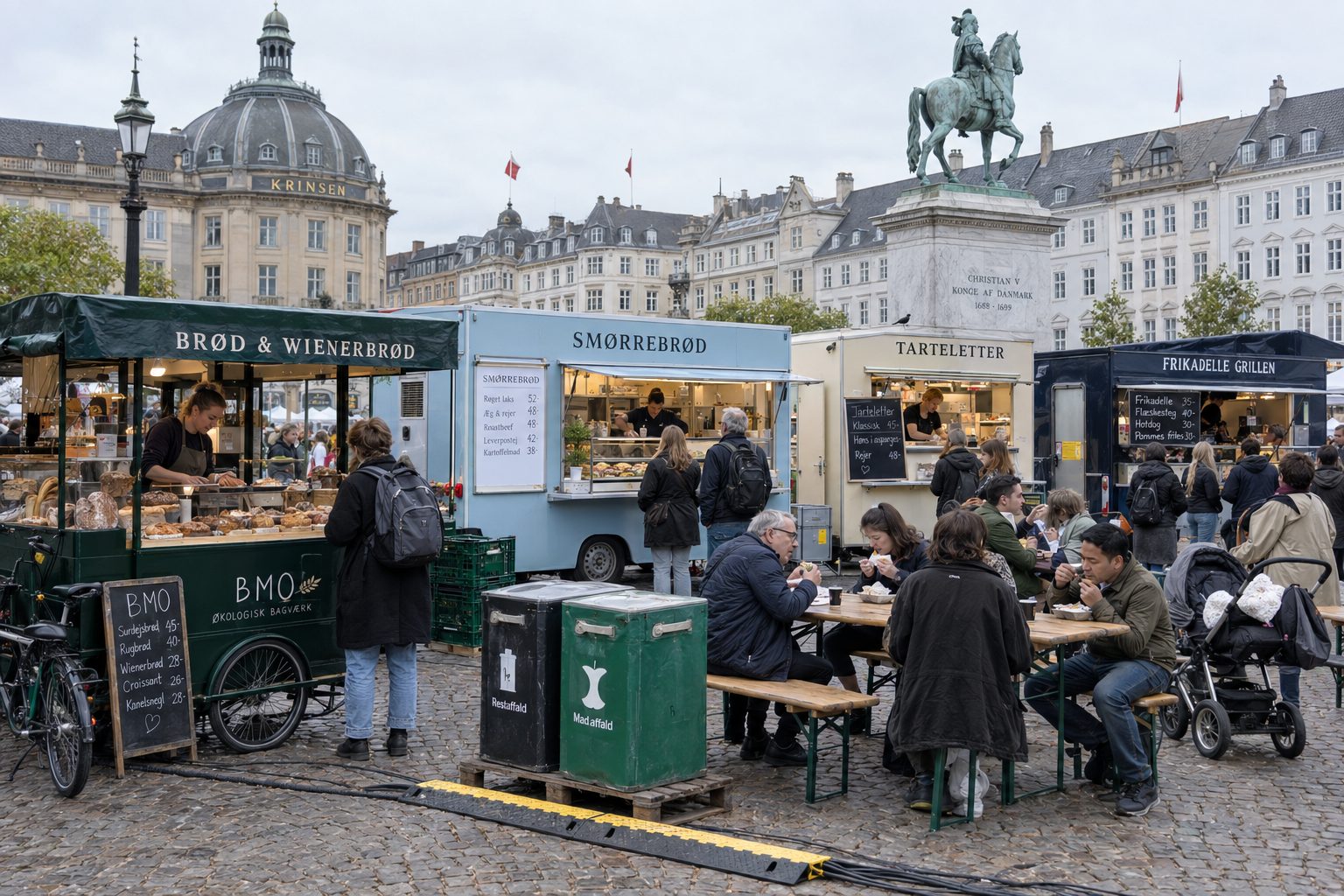
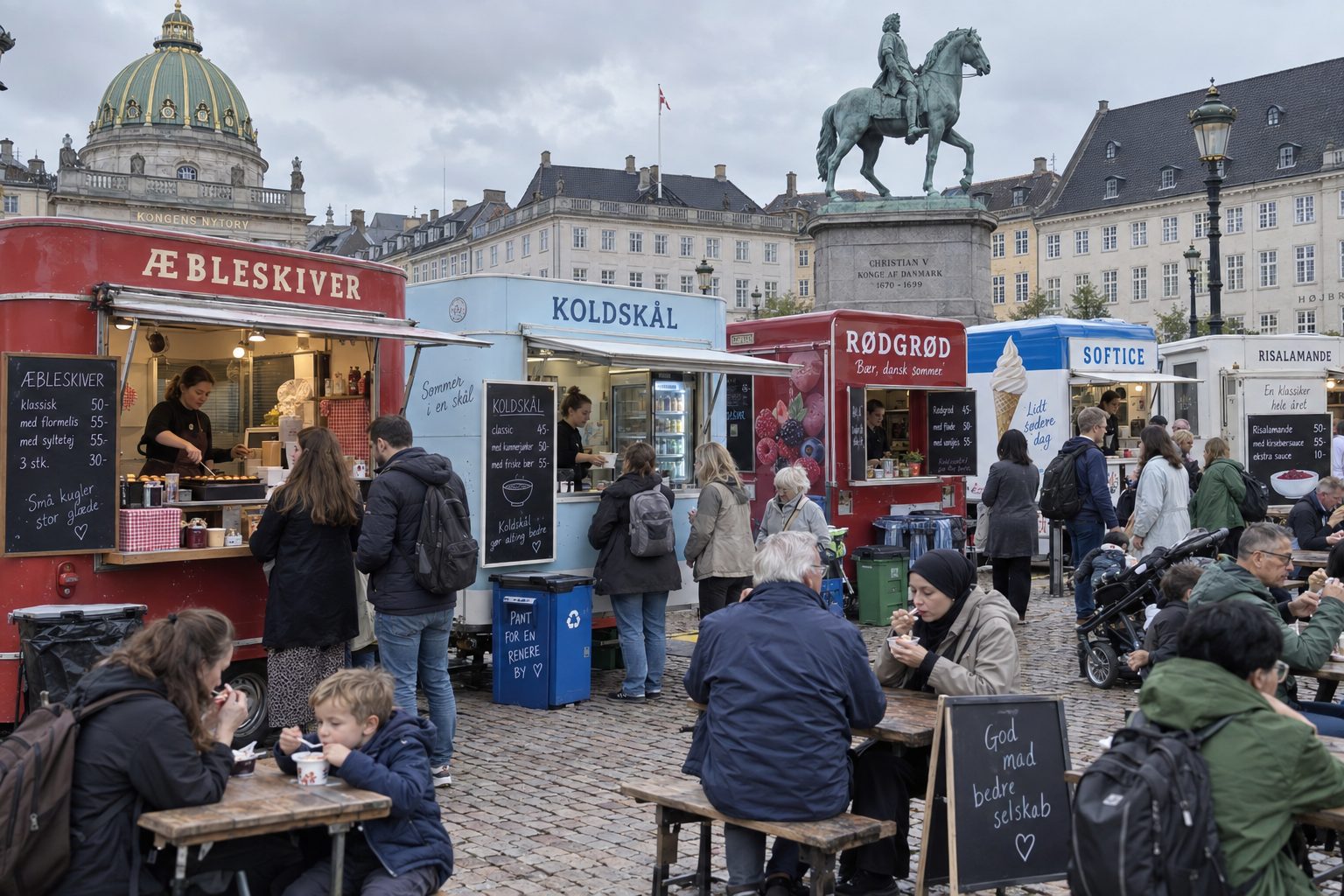
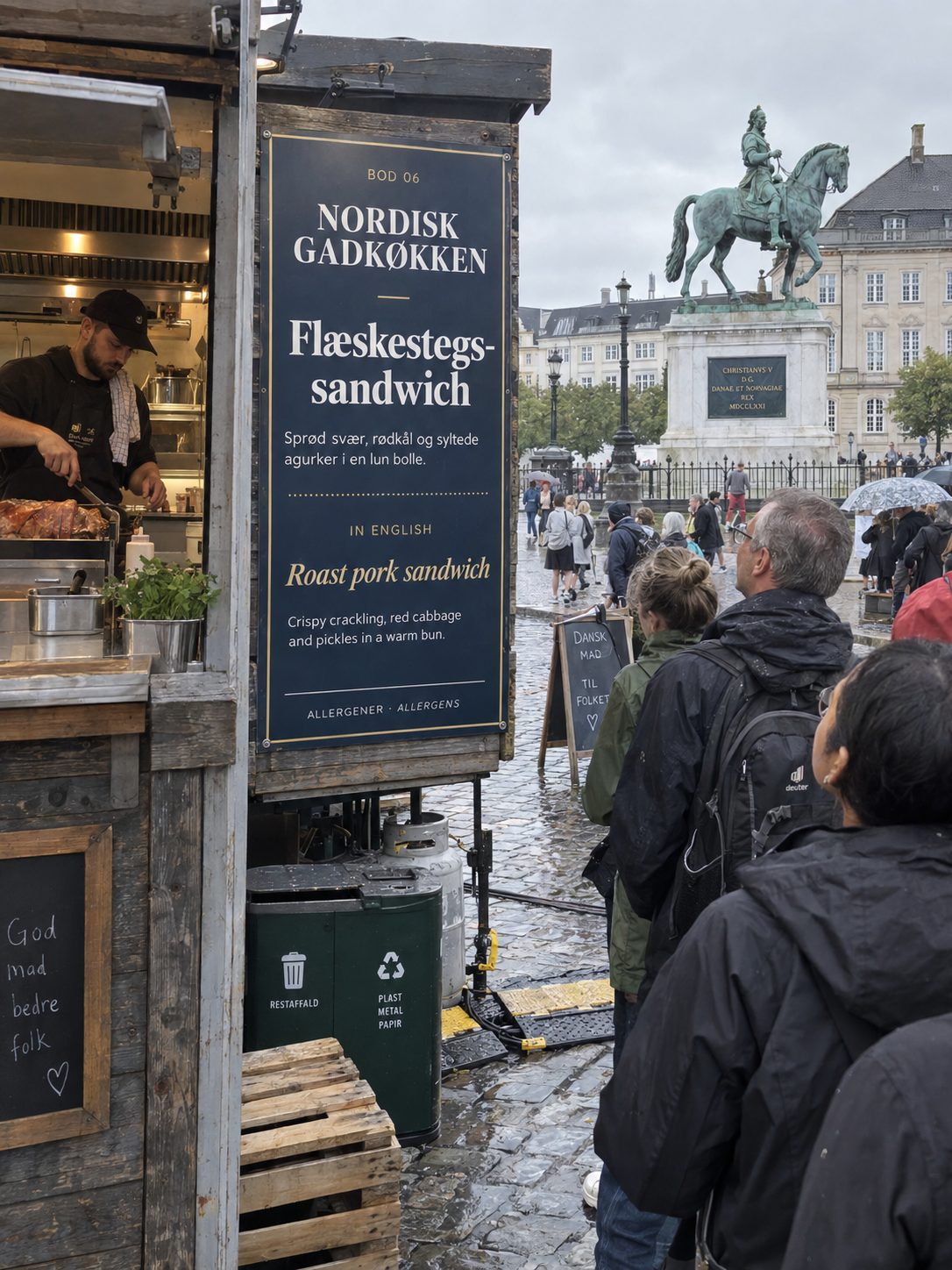
Kongens Nytorv, day four. The square does the work: stalls in a ring, benches in the middle, Christian V watching.
You land in Copenhagen. Fourteen minutes later the metro puts you on Kongens Nytorv, and the first thing you meet is not a souvenir shop — it is thirteen kitchens serving the dishes Danish families have argued about for a hundred years.
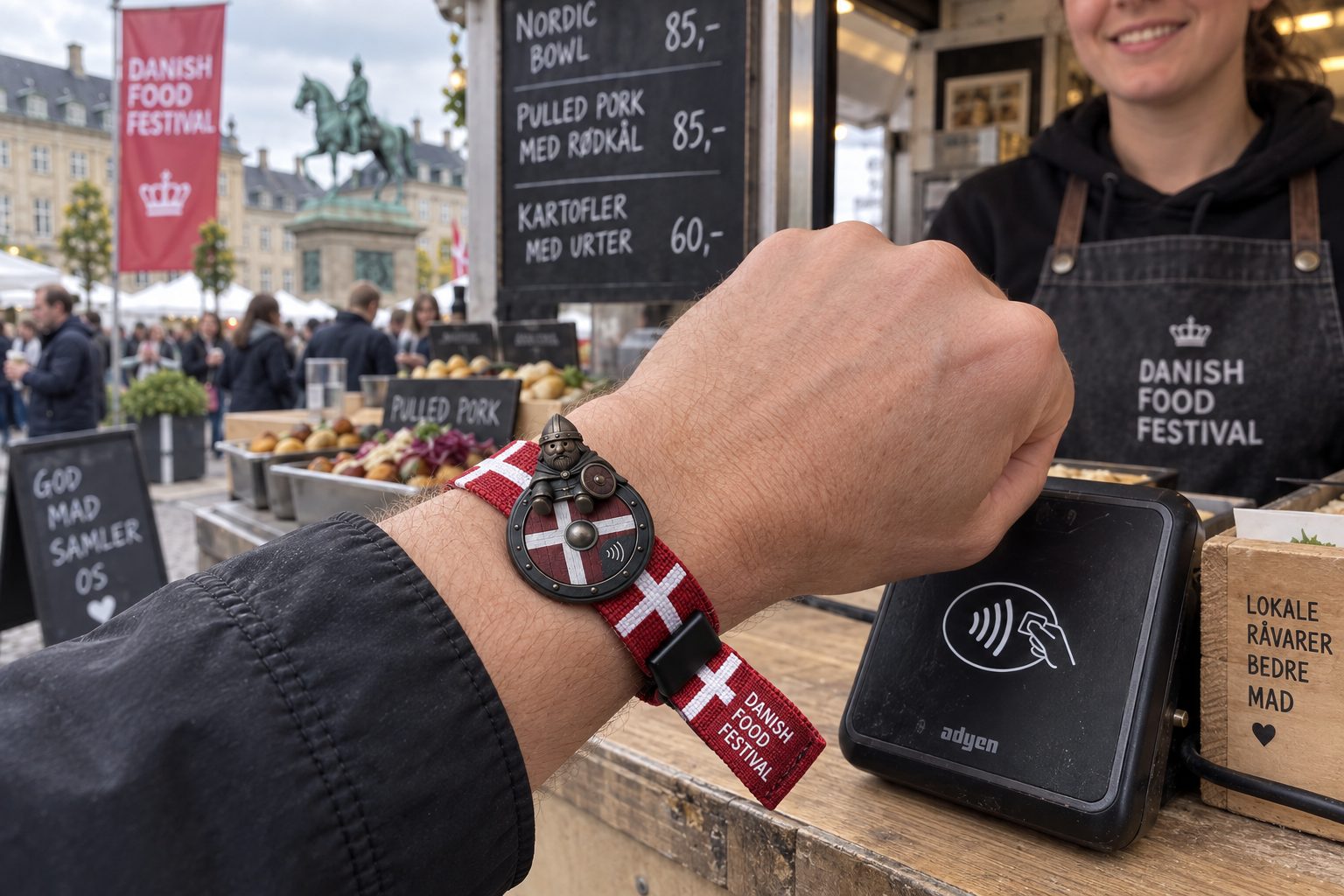
Buy a wristband. Every stall costs one clip. Portions are small on purpose, so you can taste six things instead of filling up on one. And on the band sits a small tag with a viking engraved on it — when you go home, it slides off and lives on your fridge.
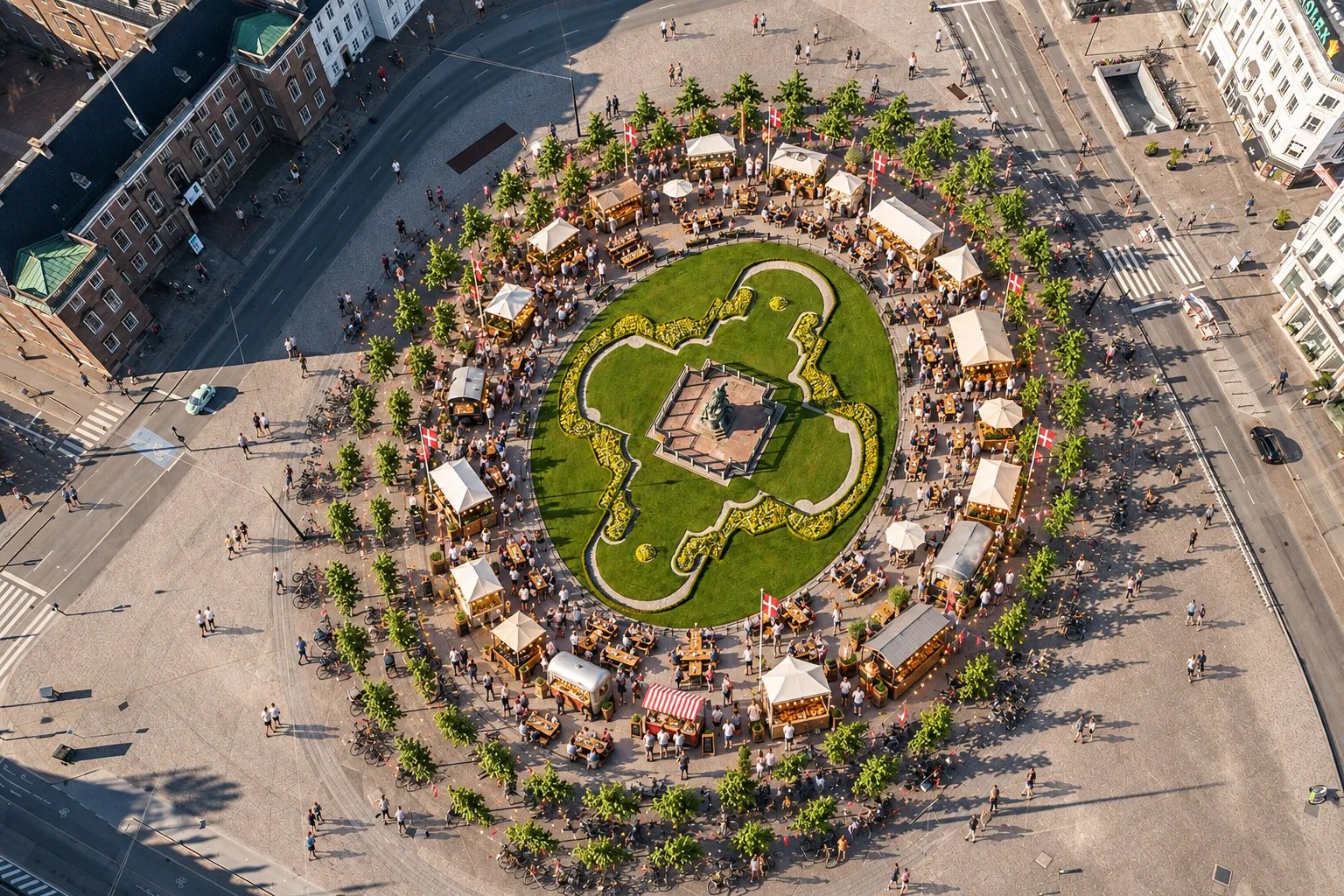
The metro from the airport stops beneath the square. Nyhavn is around the corner. For most visitors this is the first real place they stand in — so this is where Danish food should meet them.
Christian V laid out the square in 1670 as the city's stage. A national food festival belongs on a stage, not on an industrial site out by the water.
Krinsen — the oval lawn at the centre — is already a circle. Put the stalls in a ring around it and the square itself becomes the floor plan. Nobody has to design a route.
Ice rink in winter, footvolley in summer, Distortion in June. We are adding a chapter to something the square already does — not inventing a new venue.
The thirteen kitchens
Drinks come from our own bike cart inside the ring — paid there, never clipped. The welcome stall sits by the metro exit, so the band is the first thing you get and the food is the second. Toilets are on the theatre side; seating, shelter and sorted bins are inside the ring.
One dish per kitchen, and every one of them a place that already exists in Copenhagen. Small portions, so you get further. Danish names stay Danish — asking for them is half the experience.
A student project. These are the kitchens we would like to ask — none of them have been approached yet, and none of them have agreed to anything.
Sankt Peders Bageri
Pastry from the oldest bakery in Copenhagen. The morning bun Danes queue for, and the layered pastry the rest of the world calls Danish.
from 28 kr. 1 clip
Aamanns
Open sandwich on dark rye, built until you need a knife and fork. Roast beef with remoulade, egg and shrimp, liver pâté with bacon.
50–65 kr. 1 clip
Restaurant Palægade
The same rye bread, but from the sea: pickled herring, warm fish cakes, and shrimp piled higher than seems reasonable.
55–75 kr. 1 clip
Café Alrø
Crisp pastry cases filled with chicken and white asparagus in cream sauce. Served at every Danish confirmation since roughly forever.
45–48 kr. 1 clip
Restaurant Kronborg
Pan-fried meatballs of pork and veal. Every Danish family insists their grandmother made the correct version.
35 kr. 1 clip
Grøften, Tivoli
Voted the national dish of Denmark. Thick slices of pork belly fried until they shatter, with boiled potatoes and parsley sauce.
115 kr. 1 clip
Slagter Lund
Roast pork with crackling in a soft bun, red cabbage on top. The crackling has to snap — if it bends, send it back.
75 kr. 1 clip
DØP
The organic sausage cart from outside Rundetårn. Remoulade, roasted onion, raw onion, pickled cucumber, mustard, ketchup. All of it.
45 kr. 1 clip
Meyers
Pork meatballs in a mild curry sauce with rice. Denmark met curry through the spice trade and made it gentle enough for a Tuesday.
75 kr. 1 clip
Christianshavns Færgecafé
Potatoes three ways: browned in sugar and butter, baked in cream, or boiled new with dill. Denmark does not consider these a side dish.
45 kr. 1 clip
Schønnemann
Summer berries cooked down and served with cold cream — and the sentence Danes use to test whether you can really speak the language.
45 kr. 1 clip
Arla
Cold buttermilk soup with vanilla and tiny crisp biscuits. Danes drink it for lunch in June and refuse to explain themselves.
45 kr. 1 clip
La Glace
Marzipan rings baked into a tower, from a patisserie that has stood on the same street since 1870. Sweet, chewy, and gone in four bites.
40 kr. 1 clip
Run by the festival
A bike cart parked beside the ring with cold Cocio, Faxe Kondi, elderflower cordial, beer and water. We buy it in and sell it ourselves, so the kitchens can concentrate on the food.
from 20 kr. Paid, not clipped
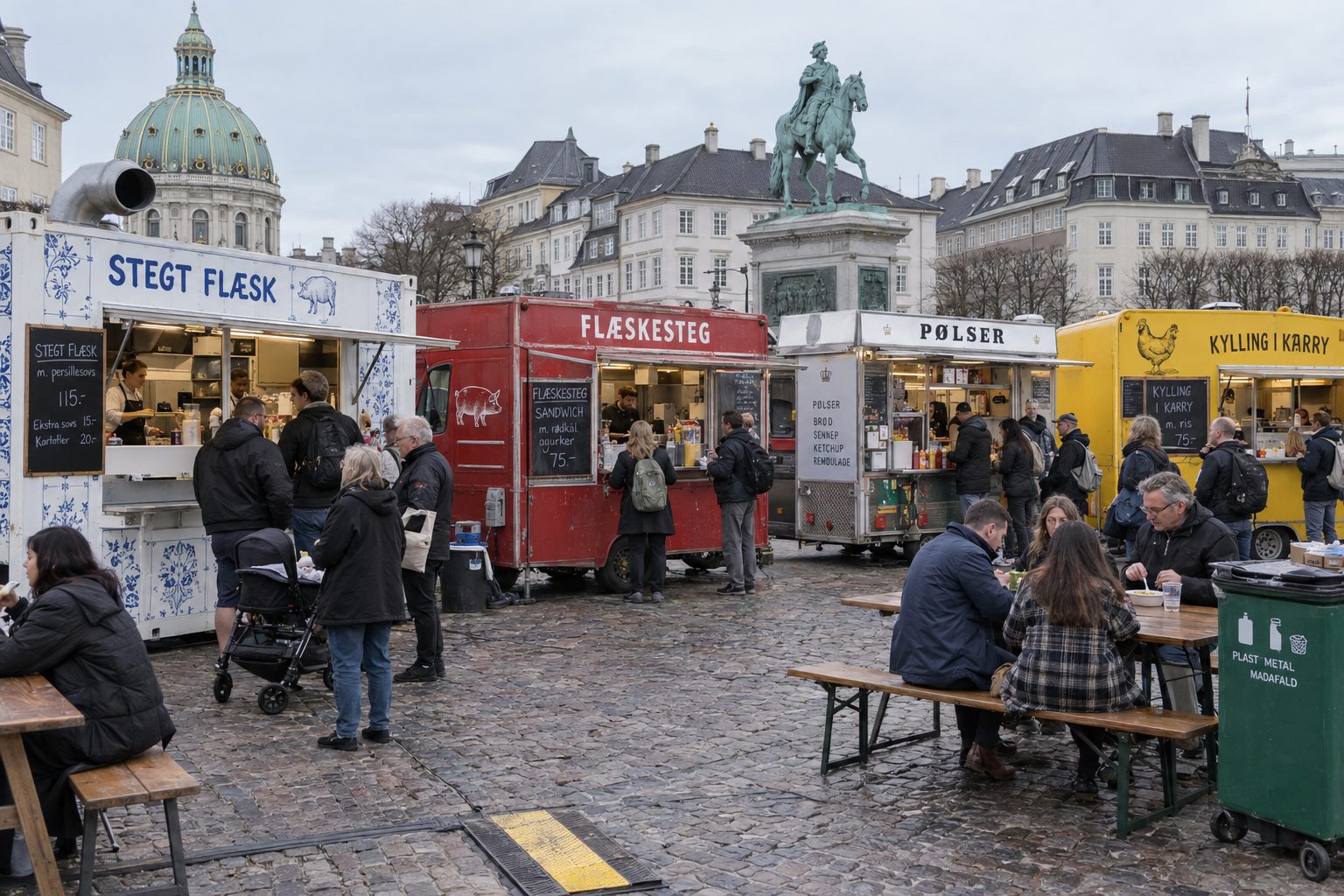
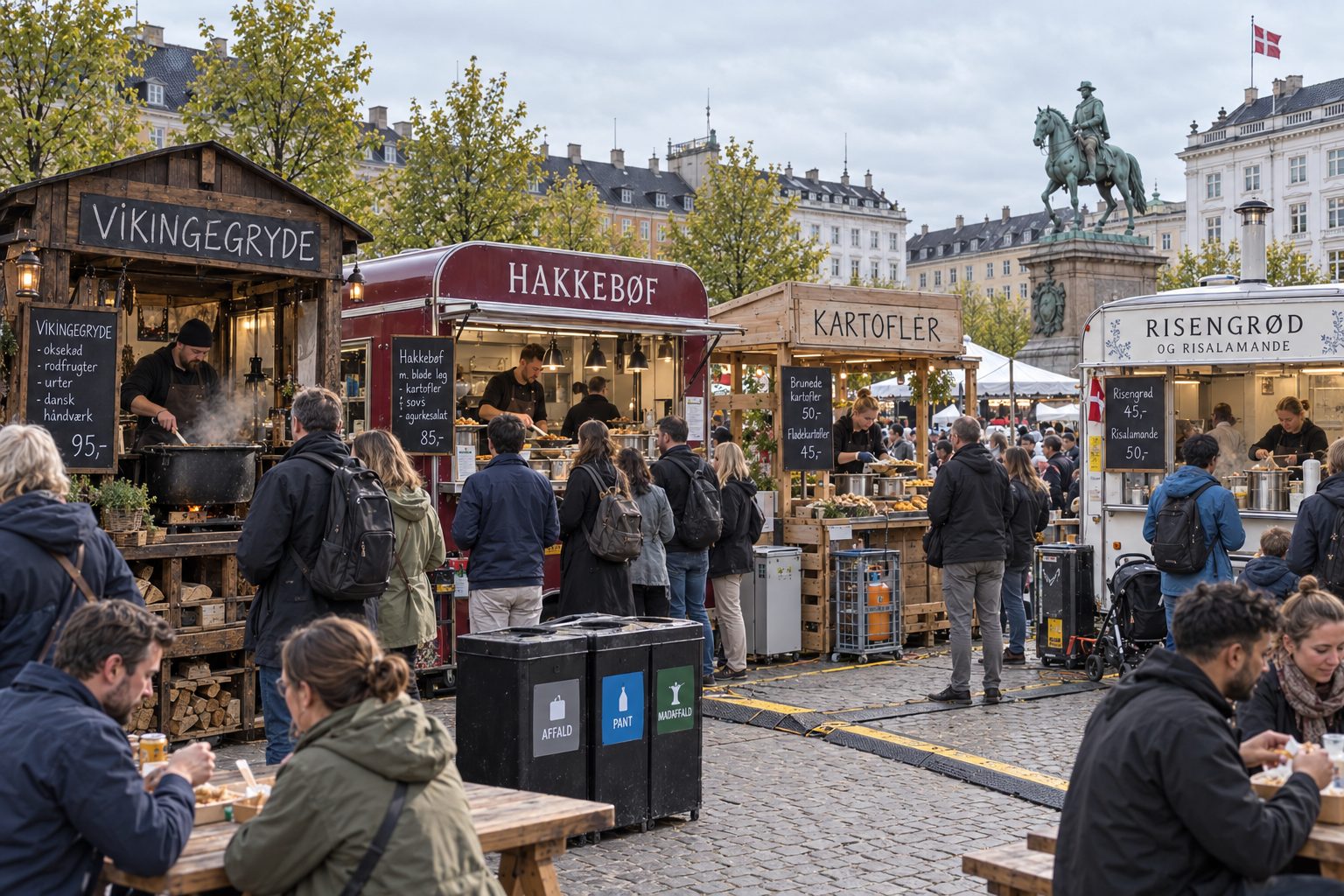
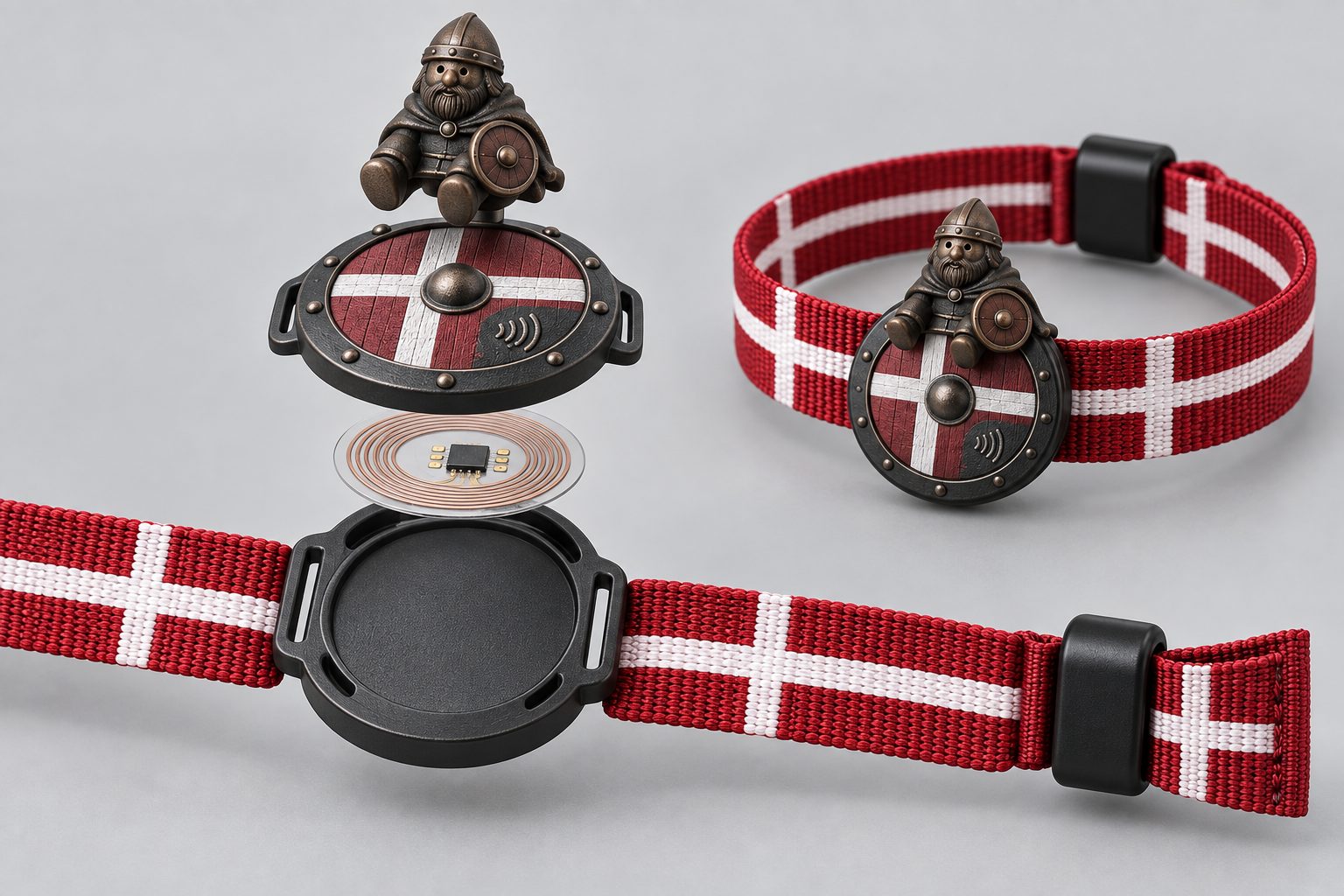
A woven band of recycled polyester, with the chip hidden inside a small viking tag. Hold it against the reader at the stall — one clip gone. The reader shows you how many you have left, so you never have to check anything yourself.
No queue at a ticket booth. No coins, no card, no account, and nothing to install. You buy the band on this website before you come, and after that the phone can stay in your pocket all day.
2 clips
75 kr.
37,50 kr. per dish
5 clips
160 kr.
32 kr. per dish
10 clips
280 kr.
28 kr. per dish
Every band comes with the viking tag, whichever one you pick — it is yours to keep. Clips cover food only; drinks come from our own cart and are paid there. Buy online, pick up in the airport arrivals hall, or get one on the square. Prices shown are placeholders until the group decides.
The little viking tag on your band is not decoration. It holds the chip that pays for your food — and when the festival is over, it slides off the band.
Next to the chip sits a small magnet. The viking goes on the fridge when you get home, next to the postcards and the takeaway menus, and he is still there long after the band itself has ended up in a drawer.
That is the whole idea. You do not buy the souvenir in a shop on your way to the airport. You wear it while you eat, and it quietly becomes the thing you keep.
Three things will be truer in ten years than they are today. The festival is an answer to all three.
In 2036
A decade of over-tourism has made visitors allergic to the staged experience. They can tell the difference between a place that lives and a place that performs.
That's why weserve what Danes eat on a Tuesday, at the price a Dane pays, cooked by the people who normally cook it.
In 2036
Portion size, packaging and leftovers are no longer a footnote in an event application — they are the first page.
That's why weserve tasting portions, sort at every stall, and let the kitchens buy for a known number of clips instead of guessing.
In 2036
Ordering, paying, queueing, choosing — by 2036 a visitor does all of it through a screen, and the algorithm has already decided where they will eat.
That's why webuilt the festival around a band you tap — not an app you download. Everything else sits on one web page you are free to ignore all day.
Free to enter. You only pay for what you eat.